How to Choose the Best Artificial Trees for Your Home Decor?
In recent years, the popularity of Artificial Trees has surged in home decor. A report by the Home and Garden Association indicates that sales of artificial plants increased by 25% last year. Consumers appreciate the low maintenance and durability these options offer. Unlike live plants, artificial trees do not require watering, sunlight, or pruning.
Choosing the right artificial tree can be daunting. Many factors come into play, including size, style, and material. Homeowners often overlook the importance of the right scale for their space. A tree that is too large can overwhelm a room. Conversely, a small tree can look lost in a spacious area.
Moreover, quality varies widely among products. Not all artificial trees are created equal, as some may look artificial and cheap. It’s essential to invest time in research and comparison. A stunning artificial tree can elevate your home's aesthetic, but a poor choice may detract from the overall design. Always reflect on what you want to achieve with this decor choice.
Factors to Consider When Choosing Artificial Trees for Home Decor
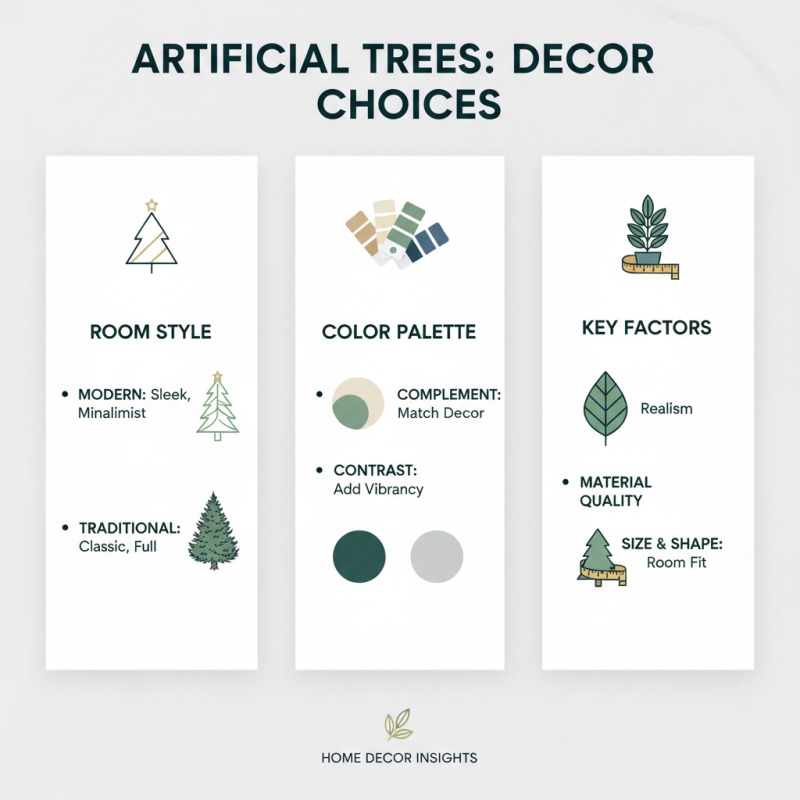
When choosing artificial trees for home decor, it's essential to consider several factors. Start with the room’s style. A modern space may look best with sleek, minimalist designs. Conversely, traditional interiors often benefit from more classic tree styles. Think about the color palette too. Choose trees that complement or contrast with your existing decor. For instance, a lush green tree can add vibrancy to neutral spaces.
Size matters significantly when selecting artificial trees. A large tree can become a focal point, while smaller ones might suit tighter spaces. Always measure the area before purchasing. Additionally, the material plays a crucial role in overall appearance. Some trees look realistic, crafted of high-quality materials, while others may appear plastic. Don’t overlook maintenance either. Some artificial trees require regular dusting, while others are easy to clean.
Finally, reflect on the purpose of the tree. Are you seeking ambiance or decoration? It’s important to think about the emotions you want to evoke. A tree with vibrant blooms might uplift a dull corner, creating warmth. However, it may not resonate with everyone’s aesthetic. Balance personal taste with practicality to enhance your space effectively.
Types of Artificial Trees Suitable for Different Interior Styles
When selecting artificial trees for your home, consider your interior style. Different styles call for different types of faux greenery. For a minimalist space, choose sleek designs like a rubber plant or a small fiddle leaf fig. These options add elegance without overwhelming the decor.
In contrast, bohemian styles benefit from larger trees. A tall palm tree or a large monstera can bring life to cluttered, vibrant spaces. Layering textures and colors makes a statement. These trees can soften angular furniture.
Tip: Position your artificial trees in natural light but away from direct sunlight. This helps maintain their look and prevents fading.
Also, consider varying heights and sizes. Mixing large and small trees can create depth. It adds visual interest and can guide the eye throughout the room. Reflections often show that balance is key. Focus on how each tree complements other decor elements.
Material and Quality: How to Identify the Best Artificial Trees
When choosing artificial trees for your home decor, material and quality are crucial. Look for trees made from high-quality plastics or silk. These materials ensure durability and a realistic look. The texture matters too. Soft leaves create a lifelike appearance while hard, shiny surfaces can look cheap. Pay close attention to the branches. Are they sturdy? Do they bend easily without breaking? These details matter.
Quality can be evident in the color. Natural trees have varied hues. Artificial trees should mimic this subtlety. A tree with uniform color may look too artificial. Inspect the stitching and the structure of the tree. Flaws in these areas can diminish its overall appeal. Also, consider the weight. A heavier tree may indicate better materials and craftsmanship.
Reflect on your space. A larger tree requires balance to avoid overwhelming the room. Small trees may be charming but can easily get lost in a big room. Placement is key. The right spot can highlight a tree's beauty, while a poor position may do the opposite. Don't rush the decision. Take time to consider these factors before making a final choice.
Artificial Trees Material Quality Comparison
Size and Placement: Finding the Right Proportions for Your Space
Choosing artificial trees for home decor can be a fun yet challenging task.
Size and placement play crucial roles in achieving the right look.
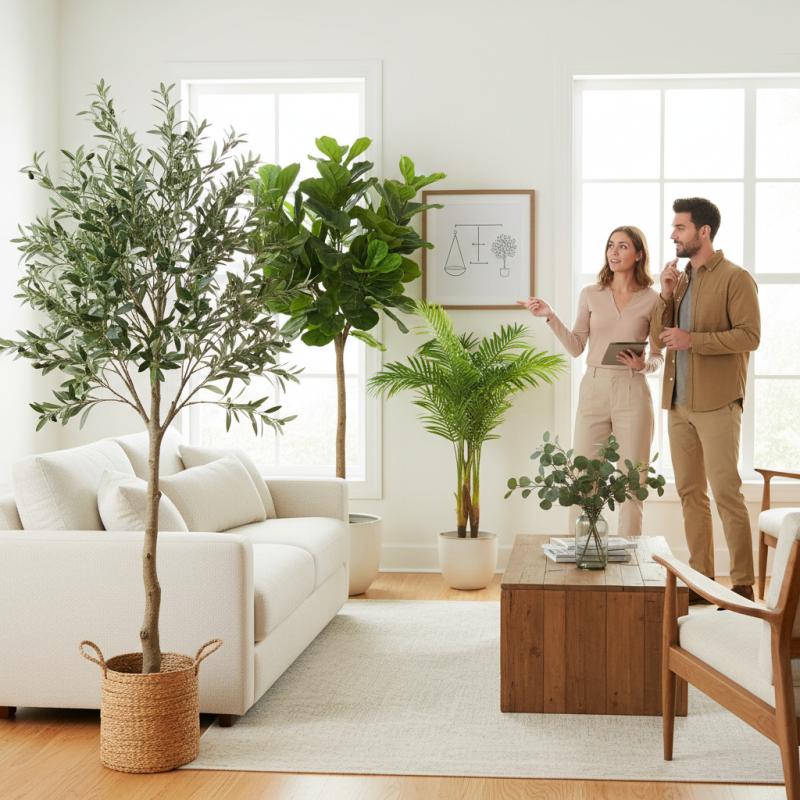
When selecting an artificial tree, consider the height and width. A tall tree in a small room can overpower the space. Aim for balance.
Tips: Measure your space before you buy. Visualize how the tree would fit. Don’t hesitate to use masking tape on the floor to outline the base.
This simple trick gives you a clearer idea of size and proportion.
Placement is equally important. Placing an artificial tree in a corner can create depth.
However, avoid dark spaces that may highlight its artificial nature.
Instead, choose bright and vibrant spots where it can shine.
Some trees look stunning by a window.
Tips: Rotate your tree occasionally. This spreads the wear and keeps it looking fresh.
Also, think about complementary decor. A tree near a cozy chair or decorative table can elevate the room.
Reflect on how it feels to walk into the space. The tree should enhance the vibe rather than detract from it.
Maintenance Tips for Keeping Your Artificial Trees Looking Fresh
Artificial trees can add a touch of nature to your home. However, keeping them looking fresh requires some effort. Dust collects easily on leaves and branches. Regularly wipe them down with a dry cloth. For tough spots, a damp cloth can work wonders. Be careful not to use harsh cleaners. These can damage the material.
Lighting is another factor. Place your artificial trees away from direct sunlight. Prolonged exposure can fade colors and make them look worn. Occasionally, check for any loose or damaged leaves. Some might need re-situating or even minor repairs. Seasonal changes can also prompt a refresh. Consider changing the arrangement or adding new decorative elements around them.
Over time, some artificial trees may lose their allure. It’s okay to reassess their place in your decor. If they begin to look out of place, consider a new style. Reflect on their impact in your space. Not every corner needs greenery. Sometimes, less is more. Keeping your home decor fresh is a creative journey.
How to Choose the Best Artificial Trees for Your Home Decor? - Maintenance Tips for Keeping Your Artificial Trees Looking Fresh
| Tree Type |
Material |
Height |
Ideal Location |
Maintenance Tips |
| Fiddle Leaf Fig |
Plastic |
5 feet |
Living Room or Office |
Dust leaves weekly, avoid direct sunlight. |
| Rubber Plant |
Fabric |
6 feet |
Entrance Hall or Dining Room |
Wipe with damp cloth, rotate for even light. |
| Palms |
PVC |
4 feet |
Bathroom or Porch |
Clean with a damp sponge, store away during winter. |
| Bamboo |
Wood and Fabric |
7 feet |
Living Room or Study |
Check for fraying, reposition for balance. |
| Olive Tree |
Polyester |
5.5 feet |
Kitchen or Dining Area |
Keep leaves dust-free, avoid excess humidity. |