Leave Your Message
Global sourcing for Artificial Trees in 2026 is not just a price comparison. Buyers must weigh branch realism, frame strength, fire-safety documentation, packaging volume, and delivery reliability. A tree that looks dense in a sample may arrive with sparse tips or a bent center pole. Details matter.
UNCTAD’s Review of Maritime Transport 2024 reports that shipping carries over 80% of world trade by volume. That figure puts freight planning at the center of seasonal buying: carton dimensions, port choices, and shipment timing can change a product’s landed cost. UN Comtrade data can also help buyers examine trade flows, though product classifications may not cleanly distinguish every type of artificial tree. Check the underlying codes. Do not treat a headline market estimate as a purchasing forecast.
Jami Warner, executive director of the American Christmas Tree Association, has emphasized the value of keeping an artificial tree for multiple seasons. The practical takeaway is simple: choose a tree built for repeat use, not just a convincing showroom photograph. Request close-up branch images, assembly instructions, packaging tests, and current compliance documents. Compare samples from more than one production run, where possible. This is not perfect protection; samples can still differ from bulk orders. A written quality checklist and pre-shipment inspection reduce that gap. This guide examines how global buyers can assess suppliers, materials, logistics, and product quality before committing to 2026 orders.
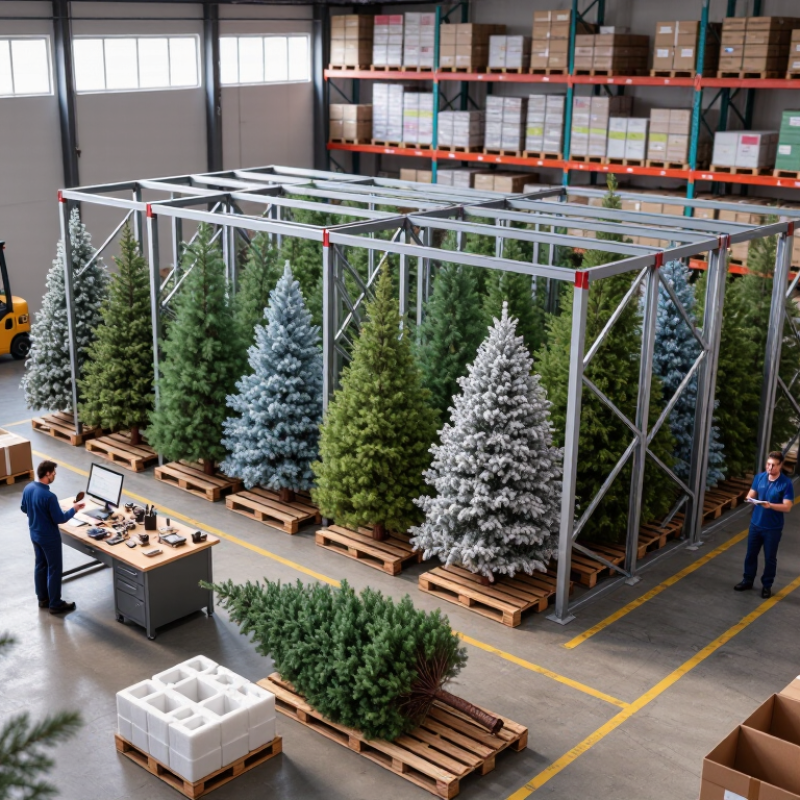
For global sourcing in 2026, classify artificial trees by their dominant material before comparing suppliers. HS 6702.10 covers artificial flowers, foliage, and fruit made from plastics. HS 6702.90 covers similar products made from other materials. The World Customs Organization’s HS 2022 notes support this split, but national tariff extensions may add digits. Check the importing country’s tariff schedule.
A plastic PVC tree with a steel trunk may still fit HS 6702.10 when plastic foliage creates the visual character. A fabric canopy, wood stem, or mixed construction needs closer review. Material percentages alone can mislead. Ask suppliers for composition sheets, product photographs, packing lists, and production samples. I have seen catalog descriptions call fabric leaves “plastic,” creating avoidable customs questions. That wording needs correction.
UN Comtrade trade records show HS 6702 activity across more than 150 reporting economies, with values and quantities varying sharply by origin. ITC Trade Map also separates export value, net weight, and unit value, helping buyers detect unrealistic quotations. Compare unit values carefully. A low price may reflect lighter foliage, fewer branches, or incomplete packing. Keep the classification rationale with purchase records. Customs officers may assess the finished article, not the supplier’s marketing label. This remains an area for reflection, because complex trees do not always fit neatly into one material category. Request a binding tariff ruling when the composition is genuinely uncertain.
Practical sourcing matrix for artificial trees and tree-like decorative foliage. The HS classification shown below follows the international four- and six-digit HS structure; importers should confirm the final tariff line, duty rate, product description, and regulatory requirements with the destination customs authority.
| Artificial Tree Type | Primary Material | Typical HS Code | Common Construction | Best-Fit Applications | Key Sourcing Checks | Classification and Compliance Notes |
|---|---|---|---|---|---|---|
| PVC or PE foliage tree | PVC PE Plastic leaves and stems; steel or plastic internal support may be included. | HS 6702.10 Of plastics |
Injection-molded or cut plastic leaves attached to wire stems, a metal trunk, or a molded plastic core. | Indoor retail displays, offices, hospitality areas, seasonal decoration, and residential interiors. | Leaf color consistency, odor, brittleness, UV resistance, flame-retardant documentation where required, carton protection, and packed volume. | Use of plastics is generally consistent with HS 6702.10 when the article is covered by heading 6702. The complete product should be reviewed, especially when substantial non-plastic components are supplied. |
| Plastic palm or tropical tree | PE PVC Plastic fronds and foliage with a steel, fiberglass, or plastic support structure. | HS 6702.10 Of plastics |
Large molded fronds fixed to a central trunk, often with a weighted base or removable sections. | Shopping centers, hotels, restaurants, event venues, themed interiors, and photo backdrops. | Overall height tolerance, base stability, modular assembly, load testing for fronds, corrosion protection, and shipping dimensions. | The visible foliage and the article’s essential character should be assessed under the applicable customs rules. National tariff schedules may add statistical subdivisions beyond HS 6702.10. |
| Textile-leaf tree | Polyester Nylon Fabric leaves, sometimes combined with plastic veins, wire, foam, or latex-like coatings. | HS 6702.90 Of other materials |
Die-cut, printed, molded, or stitched textile leaves mounted on wired branches and a rigid trunk. | Premium interiors, hospitality projects, retail decoration, showrooms, and long-term indoor installations. | Fabric composition, colorfastness, edge fraying, dust retention, cleaning method, packing compression, and evidence supporting the material declaration. | Textile foliage is normally considered “other than plastics” for the six-digit HS structure when the product falls within heading 6702. Local customs practice may depend on the completed article and principal material. |
| Silk-look flowering tree | Polyester fabric Paper Fabric or paper petals, leaves, and decorative fruit with plastic or wire supports. | HS 6702.90 Of other materials |
Layered petals or leaves formed around wire stems; trunk may be metal, resin, wood, or wrapped composite. | Wedding venues, hotels, restaurants, retail windows, exhibitions, and interior landscaping. | Petal density, handmade variation, stain resistance, color matching, assembly time, replacement parts, and protection against crushing. | Paper and textile components are not plastics for the purpose of the basic HS split. Confirm whether any separate accessories or decorative containers require independent classification. |
| Preserved-look moss or lichen tree | Polyester Paper pulp Foam Artificial moss, lichen, or foliage fixed to a rigid core or branch system. | HS 6702.90 Of other materials |
Textured artificial foliage bonded or stitched onto branches, trunks, panels, or shaped topiary frames. | Biophilic office design, hospitality interiors, acoustic or decorative installations, and retail environments. | Particle shedding, adhesive performance, moisture sensitivity, cleaning instructions, odor, fire performance, and installation hardware. | Classification should reflect the finished decorative article and its constituent materials. Natural preserved plant material may raise additional botanical or phytosanitary questions and should not be assumed to have the same treatment as synthetic foliage. |
| Mixed-material botanical tree | Plastic Textile Metal Mixed leaves, branches, trunk coverings, and support components. | HS 6702.10 or HS 6702.90 |
Plastic leaves combined with fabric flowers, metal branches, wood-look resin trunks, and a weighted base. | Custom interior landscaping, commercial displays, themed projects, and large decorative installations. | Bill of materials, material percentages, principal visual component, component value, country-of-origin marking, and packaging configuration. | Do not select the code solely from the trunk or base material. The importer should provide customs with product photographs, a bill of materials, unit value, and a clear description of the complete article. |
| Artificial bonsai or topiary tree | Plastic Textile Wire Molded or fabric foliage shaped over a wire frame, resin form, or metal trunk. | HS 6702.10 when principally plastic HS 6702.90 when principally other material |
Compact foliage mass attached to a shaped frame, often supplied in a decorative pot or planter. | Desks, reception areas, restaurants, apartment interiors, and small-space retail displays. | Pot included or excluded, finished weight, tipping resistance, surface dust, foliage fullness, planter dimensions, and retail-ready packaging. | A decorative planter may affect the customs description or treatment depending on how it is presented and valued. Verify whether the tree and container are considered one composite article or separate goods. |
| Outdoor-rated artificial tree | UV-stabilized plastic Coated metal May include polyester, PVC, PE, fiberglass, and powder-coated steel. | HS 6702.10 when principally plastic HS 6702.90 when principally other material |
UV-treated foliage on a reinforced frame with a weighted, bolted, or ground-fixed base. | Covered patios, outdoor shopping areas, event venues, commercial landscaping, and temporary installations. | UV test method, fading warranty, wind-load design, drainage, corrosion resistance, temperature range, anchoring system, and local fire requirements. | “Outdoor-rated” is a performance claim, not an HS classification. Obtain test evidence and installation instructions; tariff classification still depends on the applicable heading and material rules. |