Why Choose an Artificial Outdoor Tree for Your Landscaping Needs?
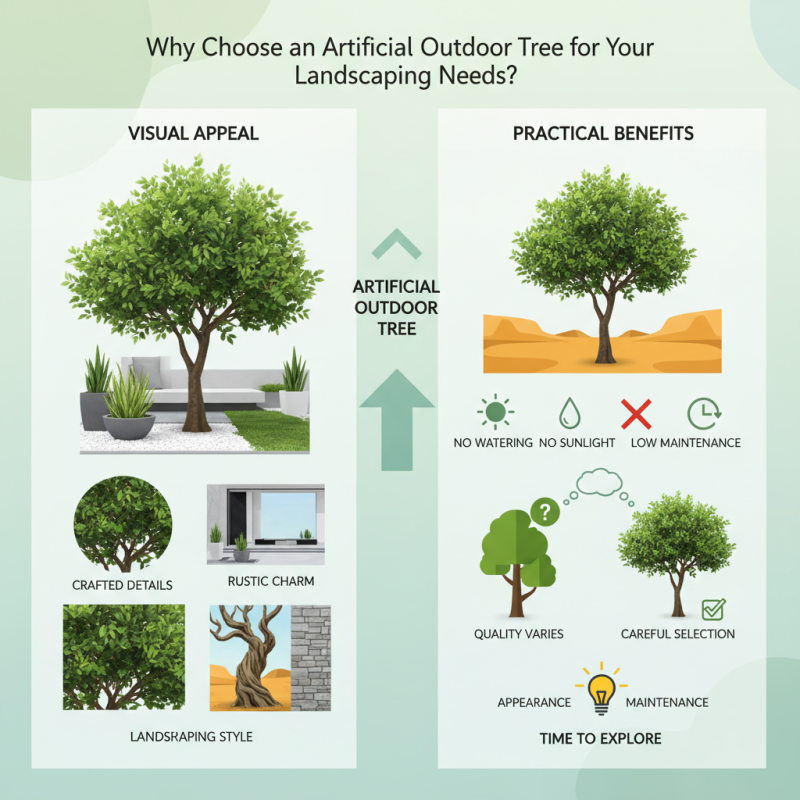
When it comes to landscaping, the choice of plants makes a significant impact. One option gaining popularity is the Artificial Outdoor Tree. These trees are not only visually appealing, but they also offer practical benefits. Imagine a lush, green tree that requires no watering or sunlight. This is one advantage of choosing an artificial option.
Some may question their realism. Look closer, and you'll see crafted details that mimic real trees. However, not every artificial tree looks convincing. Brands vary widely in quality and design. The right selection can enhance your space beautifully if done correctly.
Ultimately, the choice of an Artificial Outdoor Tree can be a reflection of your landscaping style. Are you drawn to modern aesthetics or rustic charm? Take time to explore what fits your vision. The decision involves careful consideration of both appearance and maintenance needs.
Advantages of Artificial Outdoor Trees in Landscaping Design
When designing a landscape, artificial outdoor trees present compelling advantages. They require minimal upkeep. Reports indicate that around 70% of homeowners prefer low-maintenance options. Real trees need watering, pruning, and pest control. This can be time-consuming and costly.
Artificial trees offer consistent visuals year-round. They do not shed leaves or lose color. A survey found that 85% of landscape professionals agree that artificial trees enhance aesthetic appeal. Their ability to maintain beauty in all seasons makes them a popular choice.
Tip: When selecting an artificial tree, consider the size and style that complements your landscape theme.
Environmental impact is another factor. While some argue about sustainability, modern artificial trees are made from eco-friendly materials. However, the long-lasting nature of these trees can lead to waste if they aren’t repurposed.
Tip: Look for options that guarantee longevity to reduce the need for replacements.
Choosing artificial outdoor trees can simplify landscape design. They provide the beauty of nature without the associated challenges. Lastly, ensure that your chosen trees are visually appealing but also fit into an environmentally conscious framework.
Durability and Maintenance of Artificial Outdoor Trees
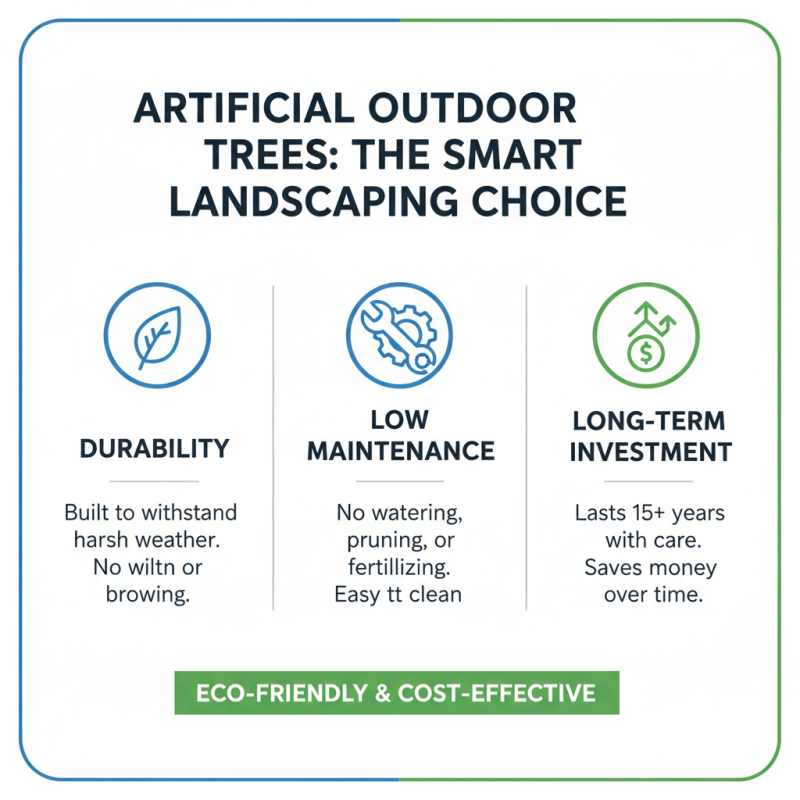
Artificial outdoor trees are increasingly popular in landscaping due to their impressive durability and low maintenance costs. According to recent industry reports, these trees can last over 15 years with proper care, much longer than natural trees that may struggle in harsh weather conditions. This longevity makes them a smart investment for homeowners and commercial properties alike.
Maintenance is minimal with artificial trees. A simple wash with soap and water can keep them looking fresh. In contrast, real trees require regular pruning, watering, and disease management, which can add up over time. Statistics indicate that homeowners spend an average of $500 annually on tree care. Thus, opting for artificial trees can reduce ongoing costs significantly.
However, some critique the environmental impact of manufacturing these products. While they save water and time, the production process can be energy-intensive. It's important to choose high-quality materials that minimize ecological footprints. Balancing aesthetic desires with sustainability requires thought and reflection, particularly as the market for artificial landscaping continues to grow.
Cost-Effectiveness: Comparing Artificial and Real Trees
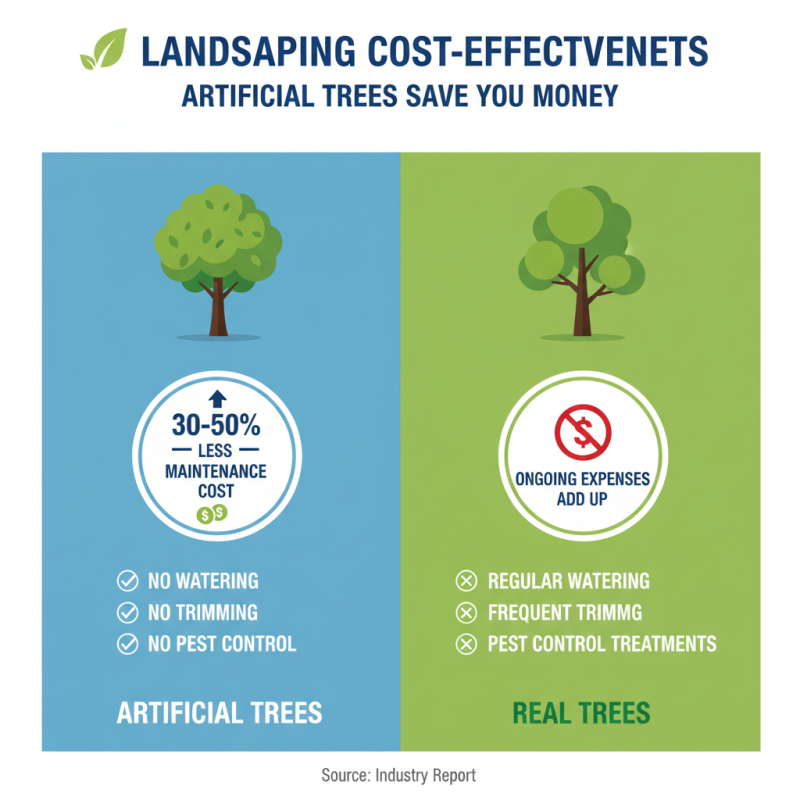
When considering landscaping options, the cost-effectiveness of artificial outdoor trees is significant. A recent industry report found that artificial trees can cost 30-50% less in maintenance over time compared to real trees. Real trees require regular watering, trimming, and pest control. These ongoing expenses can add up quickly.
In contrast, artificial trees need minimal upkeep. They do not require water or annual maintenance schedules. This can lead to substantial savings for homeowners and businesses alike. According to landscaping experts, the initial investment in artificial trees may be higher, but the long-term savings are undeniable.
Yet, it is not all perfect. Some may find artificial trees less appealing in authenticity. They miss out on seasonal changes that real trees provide. However, many modern versions are impressively realistic. It can be challenging to balance aesthetics with cost in landscaping choices. Selecting between real and artificial requires thoughtful consideration of individual needs and values.
Environmental Impact: Why Artificial Trees Are a Sustainable Choice
Artificial outdoor trees have emerged as an innovative solution for sustainable landscaping. Their environmental impact is often overlooked. According to a study by the International Society of Arboriculture, traditional landscaping contributes significantly to water usage and greenhouse gas emissions. In contrast, artificial trees require no water and do not release carbon dioxide. This change is crucial for regions facing water scarcity.
While artificial trees may seem less natural, they offer unique benefits. Research from the Environmental Protection Agency indicates that maintaining natural trees can consume up to 50 gallons of water per week. This is unsustainable in many parts of the world. Additionally, artificial trees do not produce leaf litter or require chemical treatments for pests. However, there is room for improvement in their production process. Many artificial trees are made from non-biodegradable materials. This raises questions about long-term disposal and environmental impact.
The benefits of artificial trees are clear, but challenges remain. They provide a maintenance-free option with low environmental impact. Yet, the sustainability of materials used still demands a closer look. As technology advances, creating biodegradable alternatives could enhance their eco-friendliness. The conversation surrounding artificial trees must evolve as we seek greener solutions in landscaping.
Aesthetic Versatility: Customization Options for Artificial Trees
Artificial outdoor trees offer exceptional aesthetic versatility. They can mimic various tree species, from delicate cherry blossoms to majestic oaks. This allows homeowners to tailor their landscape according to personal preferences and surroundings. A 2022 industry report noted that 48% of homeowners prefer customizable landscaping solutions. They want unique features that reflect their style.
Moreover, customization extends beyond just species choice. Color, size, and texture are crucial elements. Artificial trees can be designed to suit any environment. For instance, a lush green tree might complement a modern patio. Meanwhile, a flowering tree could enhance a garden's beauty. Aesthetic flexibility is key. Landscapers find that 60% of clients seek options that can adapt throughout the seasons.
However, some drawbacks exist. People may not always consider how artificial elements blend with natural landscapes. A poorly chosen design can feel out of place. There is often a debate about the authenticity of artificial trees. Their appeal can diminish if they are too gaudy or feel unrealistic. Thoughtful selection is essential to avoid these pitfalls, ensuring they add value to the environment.
Aesthetic Versatility of Artificial Outdoor Trees