Leave Your Message
An Artificial Outdoor Tree is a manufactured landscape feature designed to create a natural visual effect in exterior spaces. Global buyers use these trees in hotel entrances, shopping centers, restaurants, offices, and residential developments. Unlike indoor decorative plants, outdoor models must handle sunlight, wind, rain, temperature changes, and regular cleaning.
A reliable Artificial Outdoor Tree usually combines a weather-resistant trunk, UV-stabilized foliage, strong internal supports, and a stable base. Materials may include treated fiberglass, steel, polyethylene, polyester, or silicone. Each option affects appearance, weight, durability, and shipping cost. In my experience, buyers should request material specifications, UV test information, installation guidance, and product photographs before placing an order. A beautiful sample means little if the leaves fade after one summer.
Details matter. Check branch flexibility, drainage design, fire-safety documentation, packaging quality, and replacement-part availability. Suppliers should explain expected service conditions rather than promise unlimited durability. Local climate also changes the decision. Coastal air may require corrosion-resistant metal, while windy locations may need anchoring plates or weighted planters. Some specifications can still be overlooked. Even experienced buyers may underestimate maintenance, storage, or customs documentation. That is why product evaluation should include technical evidence, clear communication, and a realistic lifecycle estimate. The best choice is not always the most realistic tree. It is the one that remains safe, stable, attractive, and commercially practical in its intended environment.
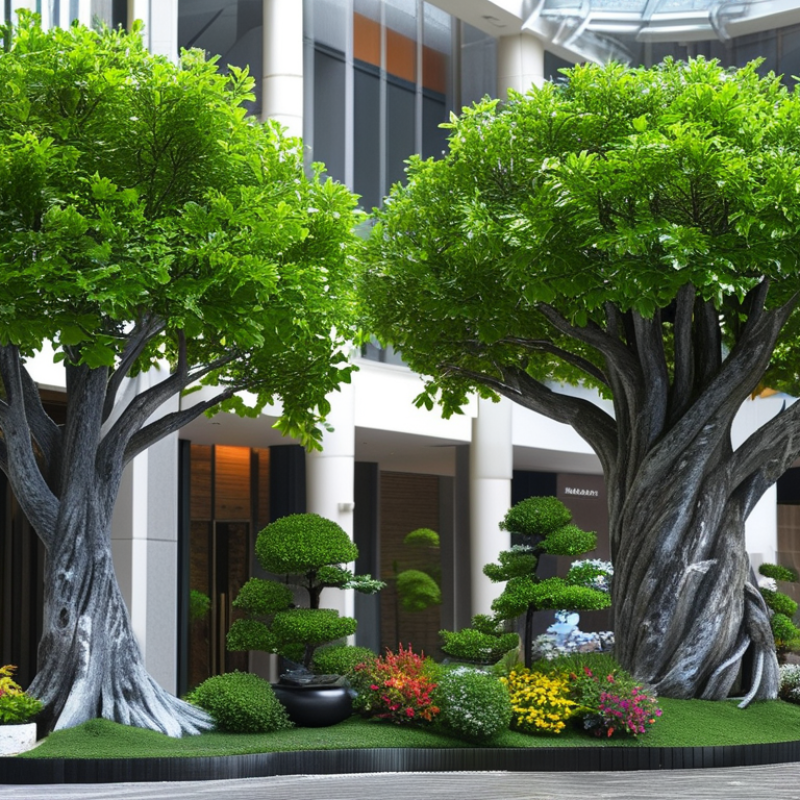
An artificial outdoor tree is a manufactured decorative tree designed for exterior spaces. It usually combines a metal frame, weather-resistant foliage, and a weighted or anchorable base. Unlike a living tree, it needs no soil, pruning, watering, or seasonal recovery.
Its scope covers small balcony trees, entrance displays, patio screens, poolside decorations, and large commercial installations. Global buyers often assess UV resistance, drainage, wind stability, flame performance, and temperature tolerance. These features matter because a tree exposed to strong sunlight may fade, while trapped water can weaken its internal structure. Local building, fire, and public-space requirements should also be checked before installation.
Main uses include hospitality landscaping, retail entrances, event decoration, residential terraces, and office courtyards. A realistic trunk texture and varied leaf density can make a display feel less repetitive. Yet appearance alone is not enough. A lightweight tree may look attractive indoors but become unstable outdoors without proper anchoring. Buyers should request material specifications, care instructions, sample photos, and testing information. Some sellers describe products as “all-weather,” but that phrase can be too broad. Real performance depends on climate, installation, and maintenance. Occasional cleaning still matters. Even durable foliage collects dust, bird residue, and salt near coastal areas.
| Data Dimension | Definition or Typical Data | Global Buyer Relevance | Key Specification or Verification Point |
|---|---|---|---|
| Core Definition | A manufactured decorative tree designed to imitate the appearance of a natural tree while being installed in an outdoor or semi-outdoor environment. | It provides a consistent green appearance without relying on live growth, irrigation, or seasonal maintenance. | Confirm whether the product is intended for fully exposed outdoor use, covered outdoor use, or indoor display only. |
| Product Scope | The category includes artificial palms, ficus-style trees, olive-style trees, bamboo-style trees, topiary forms, flowering trees, and custom landscape replicas. | Different forms support hospitality, retail, residential, office, event, public-space, and commercial landscaping projects. | Select the tree form according to climate, visual theme, available space, and required level of realism. |
| Main Foliage Materials | Common materials include polyethylene, polypropylene, polyester fabric, PVC, and UV-stabilized synthetic fibers. | Material selection affects appearance, flexibility, color retention, weight, fire performance, and outdoor service life. | Request material composition, UV test information, color-retention data, and safety documentation where required. |
| Trunk and Branch Construction | Trunks and branches may use steel, aluminum, fiberglass, resin, molded plastic, natural wood, or combinations of these materials. | The internal structure determines stability, transport weight, branch positioning, and resistance to repeated handling. | Check load-bearing capacity, corrosion protection, connection design, and whether branches are fixed or adjustable. |
| Typical Height Range | Common commercial and residential models range from approximately 0.6 m to 5 m; larger custom installations can exceed this range. | Height influences visual impact, freight volume, installation equipment, ceiling clearance, and anchoring requirements. | Verify overall height, canopy width, pot height, packed dimensions, and site clearance before ordering. |
| Weather Exposure | Outdoor models are designed to tolerate selected combinations of sunlight, rain, humidity, wind, dust, and temperature variation. | Exposure levels differ by region, so a product suitable for a covered terrace may not be suitable for a coastal or high-wind site. | Ask for the stated exposure conditions, operating temperature range, water-drainage design, and wind installation guidance. |
| UV Resistance | UV-resistant foliage contains additives or coatings intended to slow fading, embrittlement, and surface degradation caused by sunlight. | High-sunlight markets require stronger color-retention performance than shaded or indoor environments. | Do not rely only on the term “UV resistant”; request test method, exposure duration, and warranty conditions. |
| Base and Container Options | Available bases may include decorative planters, weighted pots, concrete-filled containers, steel plates, ground sleeves, and permanent anchor systems. | The base must match the installation surface and local wind conditions while supporting safe public access around the tree. | Confirm base weight, dimensions, drainage, ballast requirements, anchoring method, and compatibility with floors or paving. |
| Primary Use: Hospitality | Used in hotel entrances, restaurants, resorts, outdoor dining areas, pool decks, terraces, and reception spaces. | Creates a stable decorative setting where live plants may be difficult to maintain because of foot traffic or limited irrigation. | Prioritize realistic appearance, cleanability, fire requirements, base stability, and resistance to frequent guest contact. |
| Primary Use: Retail and Commercial Spaces | Used for storefronts, shopping centers, offices, showrooms, entrances, atriums, and branded environmental decoration. | Provides repeatable visual merchandising and can be relocated when layouts or seasonal displays change. | Evaluate modular construction, installation time, storage requirements, cleaning access, and replacement-part availability. |
| Primary Use: Residential Outdoor Areas | Used on balconies, patios, roof terraces, garden seating areas, entrances, and other locations where live landscaping is impractical. | Offers privacy screening and decorative greenery without regular pruning, watering, or soil management. | Check balcony load limits, container dimensions, wind exposure, child and pet safety, and access for cleaning. |
| Maintenance Requirement | Routine care generally includes dust removal, occasional washing with mild soap and water, branch adjustment, and inspection of fasteners. | Maintenance is usually less intensive than caring for a live tree, but outdoor exposure still causes dirt accumulation and material aging. | Follow the cleaning instructions and avoid abrasive chemicals, excessive pressure, or tools that can damage foliage. |
| Installation Method | Installation may be freestanding, weighted, bolted to a surface, inserted into a ground sleeve, or integrated into a permanent landscape structure. | The correct method reduces tipping, movement, damage to the site, and safety risks during wind or public use. | Request assembly drawings, anchoring instructions, required tools, installer qualifications, and site-specific engineering guidance. |
| Fire Performance | Some artificial foliage and decorative components are manufactured with flame-retardant treatments or materials, while others are not. | Fire requirements can be important in hotels, malls, public venues, transportation facilities, and enclosed semi-outdoor areas. | Verify the applicable local standard, test report, treatment durability, and whether the complete assembled product has been evaluated. |
| Logistics and Packaging | Trees may be shipped assembled, partially assembled, or flat-packed with detachable branches, trunks, planters, and accessories. | Packaging configuration affects freight cost, import handling, storage space, damage risk, and final assembly time. | Confirm packed size, gross weight, carton protection, pallet requirements, assembly sequence, and spare-component policy. |
| Environmental Considerations | Environmental factors include synthetic material content, product lifespan, repairability, packaging, recyclability, and end-of-life disposal. | Longer service life and replaceable parts can reduce the frequency of complete product replacement. | Request material declarations, recycled-content information where available, repair options, and disposal guidance. |
| Best-Fit Buyer Profile | Suitable for buyers seeking permanent-looking greenery with predictable appearance, limited routine care, and flexible placement. | It is especially relevant when water access, soil quality, seasonal conditions, maintenance labor, or indoor-outdoor transitions limit live-plant use. | Compare appearance, exposure rating, safety documentation, installation requirements, total delivered cost, and expected service life. |
Note: Dimensions, performance requirements, and installation methods vary by product design, local climate, building regulations, and site conditions. Buyers should verify project-specific technical documentation before purchase.